Visualizing Innovation: The Power of Creative Brain Patterns in Modern Business Design
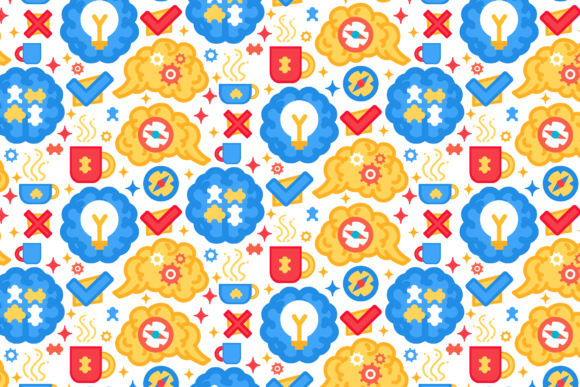
In the fast-paced world of startups and digital marketing, the ability to communicate complex ideas quickly is paramount. This is where visual metaphors become essential tools for entrepreneurs, designers, and educators. One of the most enduring and effective visual concepts is the Creative Brain Pattern. This design motif combines elements of human intellect with symbols of industry and innovation, creating a seamless narrative about how ideas are born, developed, and executed. By integrating icons such as electric light bulbs, puzzles, compasses, and hot beverages, this style of illustration does more than just decorate a page; it tells a story of awakening, planning, and successful business launches.
The Anatomy of a Creative Idea Seamless Pattern
To understand why these patterns are so effective, we must first look at their components. A typical Creative Brain Pattern is not a random collection of images. It is a carefully curated assembly of vector business ornaments that represent different stages of the cognitive and professional process. At the center of this ecosystem is often the human brain, depicted in a cartoon or flat outline style. This represents the core engine of all activity: the mind itself. However, the brain does not work in isolation.
Surrounding the central intellectual symbol are various artifacts of modern work life. The electric light bulb is perhaps the most universal symbol for inspiration and the "aha!" moment. When paired with puzzles, it suggests that creativity is also about problem-solving and fitting disparate pieces of information together. The inclusion of a compass adds a layer of strategic direction, implying that innovation requires navigation and goal-setting, not just raw imagination.
Symbolism in Everyday Office Culture
What makes these illustrations particularly relatable is their inclusion of everyday objects that ground high-level concepts in reality. Consider the cup of hot coffee or tea. In the context of a startup or a busy office, this is not merely a beverage; it is a symbol of energy, awakening, and the fuel that powers long hours of brainstorming. It represents the human side of business—the need for comfort and stimulation amidst the pressure of developing tasks.
Similarly, the checkbox and settings icons introduce the element of execution. While the brain dreams and the light bulb inspires, the checkbox ensures that goals are met and tasks are completed. This balance between dreaming and doing is crucial for any successful trendy business launch. Without the checkboxes, the ideas remain abstract; without the light bulbs, the checkboxes are empty formalities. Together, they create a holistic view of productivity.
Why Flat Cartoon Illustrations Work for Business Communication
You might wonder why a flat cartoon illustration style is preferred over photorealistic imagery for topics like analysis, logic, and psychology. The answer lies in accessibility and cognitive load. Photorealistic images can be distracting and overly specific. A photo of a specific person drinking coffee limits the viewer's ability to project themselves into the scenario. In contrast, a stylized, flat-outline texture template allows the viewer to focus on the concept rather than the details.
This style is ideal for:
- Web Design: Lightweight SVG and PNG files ensure fast loading times while maintaining clarity on all screen sizes.
- Banners and Marketing: The bold lines and bright colors of cartoon-style badges catch the eye without overwhelming the message.
- Educational Materials: Complex topics like analytical brain functions or marketing strategies become approachable when illustrated with fun, friendly icons.
Furthermore, the cartoon style reduces anxiety. Business topics such as job energy, startup activity, and performance metrics can be stressful. By presenting them through "nice worker cartoon stickers" and "fun badges," the design softens the corporate edge, making the content feel more inviting and less intimidating. This is particularly important in industries focused on psychology and well-being, where the tone of the visual material significantly impacts user engagement.
The Role of Vector Graphics in Professional Design
For designers and business owners looking to implement these themes, understanding the technical format is key. The Creative Brain Pattern is typically delivered as a set of vector files, including AI (Adobe Illustrator), EPS, SVG, PNG, and JPG formats. But why does this matter?
Vector graphics, such as those found in AI CS4 or EPS 10 files, are resolution-independent. This means you can scale a small icon of a brain or a light bulb to the size of a billboard without losing any quality. This scalability is vital for brands that need consistent imagery across various mediums—from tiny social media avatars to large conference backdrops. The inclusion of a pattern in swatch within these files allows designers to easily create seamless backgrounds for websites or printed materials, ensuring a cohesive brand identity.
Additionally, the availability of SVG files is crucial for modern web development. SVGs are code-based, meaning they can be manipulated with CSS and JavaScript. This allows for interactive elements, such as a light bulb that glows when hovered over, enhancing user experience and engagement. The PNG file with transparent background offers flexibility for overlaying these icons on different colored backgrounds, while the JPG file provides a quick-preview option for non-designers.
Practical Applications in Startup Activity and Marketing
How can businesses leverage these creative assets? The applications are vast. For a startup launching a new product, a banner featuring a brain connected to puzzle pieces and a compass can visually communicate their value proposition: "We solve your problems with strategic innovation." This immediate visual cue helps potential customers understand the company's mission before they read a single word of copy.
In internal communications, these patterns can be used to foster a culture of brainstorming and innovation. Posters in break rooms featuring cups of coffee and checklists can remind employees of the balance between rest and productivity. Digital presentations using these icons can make dry data on analytical brain processes or marketing metrics more engaging and memorable.
Moreover, in the realm of education and training, these visuals help break down complex subjects. A module on time management can use the clock and checklist icons to illustrate prioritization techniques. A course on creative thinking can use the light bulb and brain imagery to map out the journey from idea generation to implementation. By associating abstract concepts with concrete, familiar objects, learners can build stronger mental connections and retain information more effectively.
Building a Broader Understanding of Creativity
Ultimately, the Creative Brain Pattern is more than just a design trend; it is a reflection of how we understand work in the 21st century. It acknowledges that success is not linear. It involves cycles of awakening (the coffee), inspiration (the light bulb), analysis (the brain and puzzles), and execution (the checkbox). By embracing this holistic view, businesses and individuals can better navigate the complexities of modern professional life.
Whether you are a designer looking for the perfect office employee fashion icon wallpaper, a marketer crafting a campaign about job energy, or an entrepreneur mapping out your next big idea, these visual tools provide a common language. They bridge the gap between the logical and the imaginative, the strategic and the creative. As we continue to value intellect, knowledge, and intelligence in our daily activities, having a visual vocabulary that celebrates these traits becomes increasingly important.
To explore how these elements can transform your next project, consider integrating a seamless vector pattern that speaks to both the mind and the mission. By combining the right symbols with the right strategy, you can create designs that not only look good but also resonate deeply with your audience, driving engagement and fostering a culture of continuous innovation.