Understanding Hops and Barley: The Art of Malt Beer and Vintage Design Aesthetics
The world of craft brewing is built on a foundation of tradition, chemistry, and artistry. At the heart of this industry lie two fundamental ingredients: hops and barley. When combined with water and yeast, these elements create malt beer, a beverage category that has evolved significantly over centuries. However, the appreciation of malt beer extends beyond mere consumption; it encompasses a rich visual culture. From engraved vintage sets to hand-drawn collections used in modern pub menus, the aesthetic representation of these ingredients plays a crucial role in how consumers perceive and choose their drinks. This article explores the distinct characteristics of malt beer, the functional roles of its primary components, and how vintage design elements influence the drinking experience.
The Distinct Role of Hops and Barley in Malt Beer
To understand what makes malt beer distinct, one must first appreciate the individual contributions of its core ingredients. Barley provides the sugar necessary for fermentation, while hops offer bitterness, flavor, and aroma. The balance between these two defines the character of the final product.
Barley is typically malted before brewing. This process involves soaking the grain to initiate germination, then drying it with hot air to halt the process. The result is "malt," which contains enzymes that convert starches into fermentable sugars. The degree to which barley is roasted determines the color and flavor profile of the beer, ranging from pale and biscuity to dark and chocolatey. Without high-quality barley, the body and alcohol content of the beer would be significantly compromised.
Hops, on the other hand, are the flowers of the hop plant. They serve multiple purposes. Primarily, they act as a natural preservative, extending the shelf life of the beer. Secondly, they provide bitterness to counterbalance the sweetness of the malt. Finally, specific hop varieties contribute complex aromatic notes, such as citrus, pine, floral, or herbal tones. In the context of hops and barley, the interplay is delicate. A beer heavy on barley but light on hops may taste cloyingly sweet, while one dominated by hops without sufficient malt backbone can feel thin and harshly bitter.
Evaluating Malt Beer Against Other Styles
When comparing malt beer to other alcoholic beverages, several factors come into play. Unlike wines, which derive their complexity from grape varietals and terroir, malt beer’s complexity is engineered through the brewing process. Unlike spirits, which are distilled to increase alcohol concentration, beer retains the full spectrum of flavors from its raw ingredients.
- Complexity vs. Simplicity: Malt beers often offer a broader range of flavor profiles than many standardized lagers. The use of specialty malts allows for notes of caramel, coffee, and toast that are absent in lighter styles.
- Alcohol Content: Generally, malt beers sit in a moderate alcohol range, making them suitable for session drinking. This contrasts with high-alcohol spirits or fortified wines, which are consumed in smaller quantities.
- Food Pairing Versatility: The carbonation and bitterness in hop-forward malt beers cut through fatty foods, while the sweetness of malt-heavy versions complements desserts and grilled meats. This versatility often surpasses that of single-note beverages.
For consumers evaluating options, the choice often depends on the desired experience. If the goal is refreshment with subtle flavor, a light lager might suffice. However, for those seeking depth and a narrative in their glass, hops and barley driven malt beers offer a more engaging profile.
The Visual Language: Engraved Vintage Sets and Hand-Drawn Collections
Beyond taste, the presentation of malt beer is heavily influenced by design. The imagery associated with brewing—specifically engraved vintage sets and hand-drawn collections—evokes a sense of heritage and craftsmanship. These design elements are not merely decorative; they communicate quality and authenticity to the consumer.
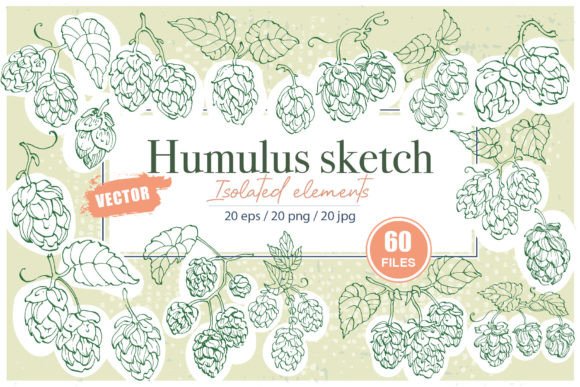
An engraved vintage set typically features detailed illustrations of hop cones, barley stalks, and brewing equipment. These images are often rendered in monochrome, mimicking the style of 19th-century botanical prints. When used on packaging or menu designs, these elements suggest a connection to traditional brewing methods. They imply that the product inside is made with care, respecting historical techniques rather than relying solely on industrial efficiency.
Sketches for Web and Pub Menus
In the digital age, the application of these vintage aesthetics has expanded. Web designers and pub owners frequently utilize sketches for web or pub menus to create a cohesive brand identity. Isolated design elements on a white background offer flexibility for various applications. For instance, a hand-drawn hop cone can be used as a bullet point in a digital menu, while an illustration of barley ears might frame a section header.
This approach offers several practical advantages:
- Clarity and Readability: Isolated elements on white backgrounds ensure that text remains legible. Unlike busy photographic backgrounds, simple sketches do not compete with the menu items.
- Brand Consistency: Using a consistent hand-drawn collection across both physical menus and websites creates a unified brand experience. Customers recognize the visual style, reinforcing brand recall.
- Emotional Connection: Hand-drawn art feels personal and artisanal. It suggests that the establishment values creativity and attention to detail, qualities that customers often associate with high-quality craft beer.
When designing for a pub menu, the choice between photographic realism and vintage sketching is significant. Photographs can make food and drink look appetizing, but they can also appear generic. Vintage engravings, however, tell a story. They invite the customer to imagine the process behind the beer, from the field to the glass. This narrative element can enhance the perceived value of the product.
Decision Factors: When to Choose Malt Beer and Vintage Aesthetics
Choosing the right beer and the right presentation depends on the context. For home brewers or small brewery owners, understanding the balance of hops and barley is essential for product development. For marketers and designers, selecting the appropriate visual style is key to audience engagement.
Best-Fit Situations for Malt Beer:
- Social Gatherings: The moderate alcohol content and diverse flavor profiles make malt beer ideal for extended social events where conversation is central.
- Culinary Experiences: Restaurants focusing on farm-to-table concepts often pair well with malt beers that highlight natural ingredients like hops and barley.
- Gift Giving: Craft beers packaged with vintage-inspired design elements make thoughtful gifts for enthusiasts who appreciate both taste and history.
Limitations and Alternatives:
While malt beer offers depth, it may not suit everyone. Individuals sensitive to gluten should note that barley contains gluten, although gluten-free alternatives using sorghum or rice exist. Additionally, those preferring low-calorie options might find some malt beers heavier than light lagers or hard seltzers. In such cases, exploring alternative grain beers or lighter styles may be more appropriate.
Similarly, in design, while vintage engravings evoke tradition, they may not suit modern, minimalist brands aiming for a futuristic or tech-forward image. In those cases, clean lines and abstract graphics might be more effective. The key is alignment between the product’s identity and its visual representation.
Conclusion: Integrating Taste and Tradition
The appeal of hops and barley in malt beer lies in their ability to create a balanced, complex beverage that respects tradition while allowing for innovation. Whether you are a consumer choosing your next drink or a business owner designing a menu, understanding the nuances of these ingredients and their visual representation is valuable. By appreciating the distinct roles of hops and barley, and leveraging the emotional power of engraved vintage sets and hand-drawn collections, one can make more informed decisions that enhance both the drinking and dining experience. Ultimately, the best choice is one that aligns with personal taste preferences and the desired atmosphere, ensuring that every sip and every glance at the menu contributes to a satisfying whole.