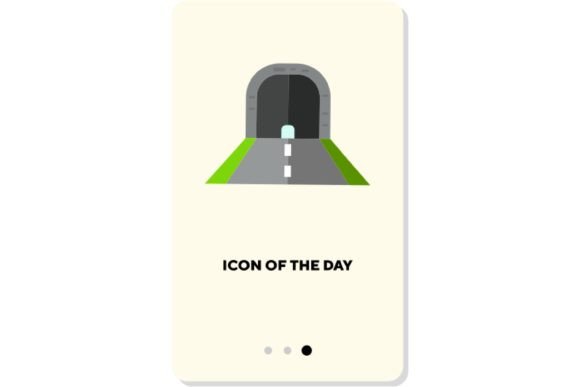
Road Surface Flat Icon. Asphalt Way Isol: Visualizing Infrastructure for the Digital Age
In the expansive library of digital assets, specific symbols often carry more weight than their simple geometry suggests. The Road Surface Flat Icon. Asphalt Way Isol is a prime example of how a minimalist graphic can bridge the gap between abstract design and tangible reality. For web designers, urban planners, logistics coordinators, and content creators, this vector illustration is not merely a decorative element; it is a functional tool that communicates concepts of connectivity, progress, and construction with immediate clarity.
The demand for high-quality, isolated vector signs has surged as digital interfaces become more sophisticated. Users no longer tolerate cluttered or ambiguous visuals. They expect clean, scalable, and semantically accurate icons that load quickly and render perfectly across devices. This shift in user expectation has elevated the status of niche assets like the road surface flat icon, transforming them from afterthoughts into essential components of modern visual communication.
The Evolution of Infrastructure Symbols in Web Design
Historically, icons representing roads or construction were often overly detailed, relying on skeuomorphic designs that mimicked real-world textures. While visually rich, these assets were heavy on file size and difficult to scale. As web design moved toward flat design principles, the need for simplified, geometric representations became paramount. The Road surface flat icon. Asphalt way isolated vector sign emerged as a solution to this problem, stripping away unnecessary detail to focus on the core essence of the subject: the path forward.
This evolution mirrors broader changes in how we consume information. In an era of rapid scrolling and short attention spans, visual cognition must be instantaneous. A flat icon of an asphalt way allows the brain to process the concept of "road" or "construction" in milliseconds. This efficiency is crucial for mobile-first designs, where screen real estate is limited, and clarity is king. The isolation of the vector sign ensures that it can be placed against any background without visual conflict, offering designers unprecedented flexibility.
Practical Applications Across Industries
The utility of the Roadway and construction concept extends far beyond generic website decoration. Its application is diverse, serving various professional needs with precision and adaptability.
- Logistics and Transportation: For companies involved in shipping, freight, or ride-sharing, the road icon serves as a universal symbol for transit routes, delivery status, and network coverage. It helps users visualize the journey of their goods or services.
- Urban Planning and Civil Engineering: Municipal websites and engineering firms use these vector elements to illustrate project scopes, zoning maps, and infrastructure development plans. The clean lines of a flat icon complement technical diagrams without overwhelming the viewer with data.
- Real Estate and Property Development: When showcasing new developments, highlighting nearby infrastructure is key. An isolated asphalt way icon can subtly indicate accessibility, proximity to main roads, and ongoing community improvements.
- Travel and Tourism: Travel blogs and booking platforms utilize road symbols to map out itineraries, suggest road trips, or indicate driving directions. The aesthetic appeal of a well-designed flat icon enhances the user experience, making planning feel less like a chore and more like an adventure.
Each of these applications relies on the icon’s ability to convey complex spatial relationships simply. By using vector illustration symbol elements for web design, professionals ensure that their messaging remains consistent and professional, regardless of the platform or device used by the audience.
Why Vector Isolation Matters for Modern Workflows
The term "isolated" in Asphalt Way Isol is not just a descriptor; it is a critical feature for modern creative workflows. An isolated vector sign means the graphic has a transparent background and clean edges, free from unwanted artifacts or bounding boxes. This characteristic is vital for several reasons:
- Seamless Integration: Designers can drop the icon into any layout, whether it’s a dark-mode interface, a colorful marketing banner, or a printed brochure, without needing extensive editing.
- Scalability: Vector formats, such as SVG, allow the icon to be resized infinitely without losing quality. This is essential for responsive web design, where elements must look sharp on both a small smartphone screen and a large 4K monitor.
- Customization: Because the icon is vector-based, its colors, stroke widths, and shapes can be easily modified to match brand guidelines. A company can adjust the asphalt gray to match their corporate palette or change the line weight to fit a specific design language.
This flexibility reduces production time and costs. Instead of commissioning custom illustrations for every variation, teams can leverage high-quality base assets like the road surface flat icon and adapt them as needed. This efficiency is particularly valuable for startups and small businesses operating with lean resources.
Aligning with Current Design Trends
Current design trends favor minimalism, accessibility, and semantic clarity. The Road Surface Flat Icon. Asphalt Way Isol aligns perfectly with these principles. Minimalism dictates that every element on a page must serve a purpose. A flat icon removes visual noise, allowing the user to focus on the content. Accessibility standards require sufficient contrast and clear symbolism, which flat designs inherently support due to their bold shapes and limited color palettes.
Moreover, there is a growing emphasis on "human-centric" design. Even in technical fields like construction and logistics, the goal is to make information approachable. A friendly, clean icon softens the industrial nature of roadway concepts, making them more inviting to the general public. This subtle psychological effect can improve engagement rates and user satisfaction.
Another trend is the rise of micro-interactions. Icons are no longer static; they often animate on hover or click. A simple vector path is ideal for animation because it requires less processing power than complex raster images. Designers can easily animate the lines of the asphalt way to suggest movement or progress, adding a layer of interactivity that delights users without compromising performance.
Selecting the Right Assets for Your Project
When choosing Vector illustration symbol elements for web design, quality should never be compromised. Not all flat icons are created equal. Some may have inconsistent stroke weights, poorly aligned nodes, or non-standardized dimensions. These issues can lead to a disjointed visual identity and increased development time.
To ensure you are selecting the best assets, consider the following criteria:
- Consistency: Ensure the icon matches the style of your existing icon set. Look for similar corner radii, stroke widths, and perspective.
- Format Compatibility: Verify that the asset is available in formats suitable for your workflow, such as SVG for web and AI or EPS for print.
- Licensing: Always check the license terms. Commercial projects require appropriate rights to avoid legal complications.
- Optimization: Choose assets that are optimized for web use, with clean code and minimal file size, to maintain fast loading times.
By prioritizing these factors, you ensure that your use of the Roadway and construction concept enhances rather than hinders your project’s success.
The Future of Symbolic Communication
As technology continues to advance, the role of symbolic communication will only grow. With the emergence of augmented reality (AR) and virtual reality (VR), clear, recognizable icons will be essential for navigating mixed-reality environments. The Road surface flat icon. Asphalt way isolated vector sign may soon appear in AR navigation overlays, guiding users through physical spaces with digital precision.
Furthermore, as global connectivity increases, the need for universal visual languages becomes more pressing. Icons transcend language barriers, making them indispensable for international audiences. A well-designed road icon is understood globally, facilitating smoother communication across cultures and borders.
In conclusion, the Road Surface Flat Icon. Asphalt Way Isol is more than a simple graphic. It is a versatile, efficient, and meaningful tool that supports a wide range of professional and creative endeavors. By understanding its value and applying it strategically, designers and businesses can create more engaging, accessible, and effective digital experiences. As we continue to navigate the complex landscape of modern communication, such symbols will remain vital signposts, guiding us toward clearer and more connected interactions.