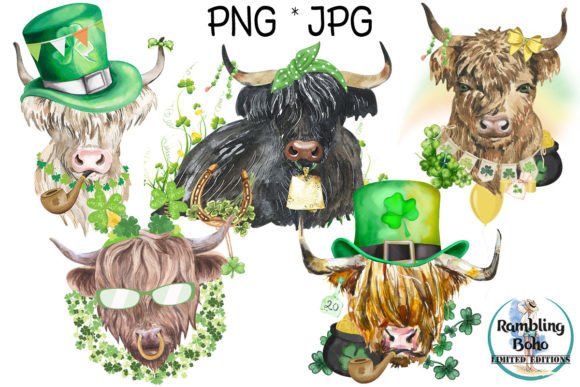
Evaluating St. Paddy’s Day Cow Sublimation Elements for Custom Apparel and Decor
The intersection of holiday-themed design and modern printing technology has created a vibrant market for niche digital assets. Among these, St. Paddy’s Day Cow Sublimation Elements have emerged as a distinctive category for creators looking to produce unique merchandise. These designs typically feature bovine characters adorned in festive attire, such as shamrocks, leprechaun hats, or green accessories, blending rustic charm with seasonal cheer. For designers, crafters, and small business owners, understanding the technical specifications and practical applications of these elements is crucial before integrating them into a product line.
This guide explores what makes these specific sublimation elements distinct, how they compare to other digital formats, and when they represent the most efficient choice for your creative workflow. By examining the file types, resolution standards, and usage limitations, you can make an informed decision about whether these assets align with your production needs.
Understanding the Digital Format and Technical Specifications
When acquiring St. Paddy’s Day Cow Sublimation Elements, it is essential to recognize that you are purchasing a digital download rather than a physical product. The core value lies in the versatility of the provided file formats. Typically, these packages include PNG and JPG files, which are flattened objects. This means the layers are merged, and the image is ready for immediate use in various design programs without the need for complex layer management.
The inclusion of PNG format is particularly significant for sublimation and direct-to-garment (DTG) printing. PNGs often support transparent backgrounds, allowing designers to place the cow graphics seamlessly onto different colored substrates without unsightly white boxes around the edges. The JPG format serves as a reliable alternative for projects where transparency is not required, offering smaller file sizes for easier storage and faster loading times in web-based design tools.
Additionally, many providers offer an EPS format bonus. While the primary files are raster-based, the EPS file can be useful for certain vector-compatible workflows, although it is important to note that the core designs are not fully editable vectors in the traditional sense. All graphics are rendered at 300dpi (dots per inch), which is the industry standard for high-quality printing. This resolution ensures that when the images are printed on mugs, t-shirts, or tote bags, the details remain crisp and clear, avoiding the pixelation that plagues lower-resolution web images.
Compatibility with Design Software and Printing Methods
One of the primary advantages of these elements is their broad compatibility. Because the files are standardized raster images, they can be opened and manipulated in a wide array of software applications. Professionals using Adobe Illustrator, Affinity Designer, or Photoshop will find these files easy to import, resize, and integrate into larger compositions. Hobbyists using free or entry-level design tools can also utilize these assets effectively, provided the software supports PNG and JPG imports.
These elements are specifically optimized for several printing technologies:
- Sublimation: Ideal for polyester-coated items like mugs, mousepads, and aluminum panels. The high DPI ensures vibrant color transfer.
- DTG (Direct-to-Garment): Suitable for cotton blends, allowing the detailed cow illustrations to print directly onto fabric.
- DTF (Direct-to-Film): A growing popular method that works well with these raster files, offering durability and flexibility on various textiles.
- Regular Printing: Perfect for creating stickers, greeting cards, or wall art using standard inkjet or laser printers.
However, it is critical to understand what is not included. These packages do not contain cut files, craft files, or fully editable vector paths. If your workflow relies heavily on cutting machines like Cricut or Silhouette for vinyl decals, these raster files may require additional steps, such as using auto-trace features, which can sometimes result in loss of detail. Therefore, these elements are best suited for printing applications rather than cutting applications.
Comparing Raster Elements to Vector Alternatives
When evaluating St. Paddy’s Day Cow Sublimation Elements, it is helpful to compare them against fully vector-based alternatives. Vector files, such as SVGs, are composed of mathematical paths and can be scaled infinitely without losing quality. They are also fully editable, allowing users to change colors, reshape elements, or isolate specific parts of the design easily.
In contrast, the flattened PNG and JPG files offered in these sublimation packs are static. You cannot easily change the color of the cow’s spots or remove a specific accessory without advanced photo editing skills. However, this limitation comes with a tradeoff: raster files often capture more intricate textures, shading, and artistic nuances that vectors may simplify. For sublimation, where photographic quality and depth are often desired, the 300dpi raster format is frequently superior to simple vector clipart.
Furthermore, vector files can sometimes be more expensive or come with stricter licensing terms due to their editability. The flattened nature of these sublimation elements offers a straightforward, "what you see is what you get" approach that speeds up the design process for those who do not need to deconstruct the image.
Decision Factors: When to Choose These Elements
Choosing the right digital asset depends on your specific project requirements and technical capabilities. St. Paddy’s Day Cow Sublimation Elements are the right choice if:
- You prioritize speed and ease of use: The files are ready to print, requiring minimal preparation.
- You are using sublimation or DTG printers: The 300dpi resolution is optimized for these high-quality output methods.
- You want unique, pre-designed aesthetics: The artistic style is already established, saving you the time of creating original illustrations.
- You work with multiple design programs: The universal compatibility of PNG and JPG ensures you are not locked into a single software ecosystem.
Conversely, you may need to look for alternative resources if:
- You require extensive customization: If you need to change individual colors or rearrange components of the design, a vector-based SVG pack would be more appropriate.
- Your primary output is vinyl cutting: Without native cut files, you may face challenges achieving clean edges for vinyl decals.
- You need infinite scalability: While 300dpi is excellent for standard sizes, extremely large format prints might benefit from vector graphics to maintain absolute sharpness at any dimension.
Practical Considerations for Quality and Consistency
While the technical specifications are robust, real-world results can vary. It is important to acknowledge that colors may vary slightly due to differences in screen settings and printing methods. Monitors display colors using light (RGB), while printers use ink (CMYK or sublimation dyes). This inherent difference means that the vibrant greens of the shamrocks on your screen might appear slightly darker or lighter on the final product. Professional creators mitigate this by performing test prints and calibrating their monitors to match their printer profiles.
Each design in the package is provided as a separate file, which aids in organization but requires careful management during the design phase. Ensuring that you select the correct file for the intended substrate is vital. For example, using a JPG with a white background on a dark t-shirt without proper pretreatment or design adjustment will result in a visible square around the image.
Final Thoughts on Integrating Festive Designs
Incorporating St. Paddy’s Day Cow Sublimation Elements into your product lineup can add a playful and timely touch to your offerings. The blend of agricultural charm and holiday spirit appeals to a broad demographic, making these designs versatile for various merchandise types. By understanding the strengths of the PNG and JPG formats, respecting the 300dpi resolution limits, and recognizing the absence of vector editability, you can leverage these assets effectively.
Ultimately, these elements serve as a powerful tool for creators who value efficiency and high-quality print results over deep customizability. Whether you are producing limited-edition holiday mugs or expanding your spring apparel collection, these digital downloads provide a solid foundation for professional-looking products. Always remember to verify your printer’s capabilities and perform test runs to ensure the final output meets your quality standards, accounting for the natural variations in color reproduction inherent in digital printing.